Mandala Coloring Pages Vol-18 Interiors Review
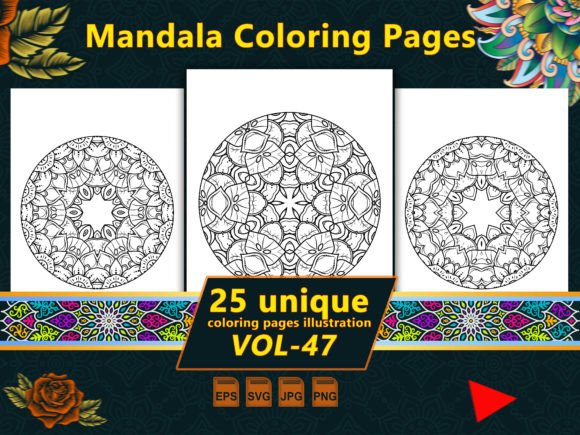
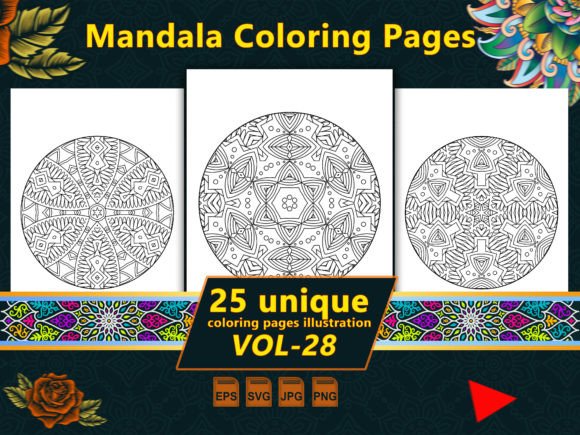
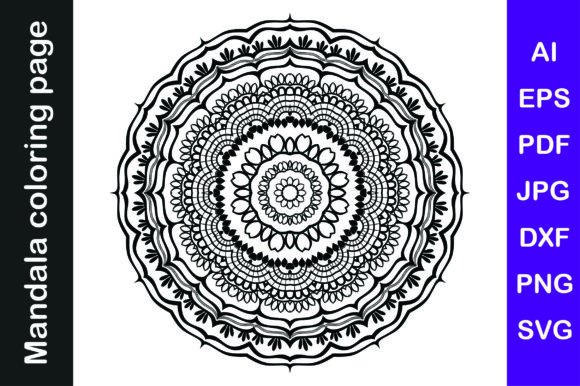
I opened the folder of Mandala Coloring Pages Vol-18 Interiors expecting clean linework, and I was not disappointed. The collection breathes calm geometry. Each page carries a balanced, circular rhythm that feels meditative without being overly complex. For an embroidery designer, this is a promising starting point. The mandalas lean toward interior-inspired motifs, ornamental flourishes, concentric petals, and delicate symmetry that read beautifully as stitchable art. The mood is serene, a little bohemian, and quietly elegant. It fits the kind of handmade product that customers reach for when they want something thoughtful, not loud.
I immediately pictured a linen pillow cover. One of the lighter mandalas, about seven inches in diameter, placed off-center on a natural flax background with a single thread color, maybe a dusty terracotta or soft sage. That kind of finished product stops people at a craft fair. It makes them pick it up and run their thumb over the stitching. That is the feeling Mandala Coloring Pages Vol-18 Interiors can deliver when interpreted correctly through embroidery.
First Look at the Design Personality
The mandalas in this collection are not overly intricate. That is a strength. Some embroidery-ready mandala artwork gets lost in microscopic detail that simply cannot translate well to thread. Here, the line spacing feels generous enough for a satin stitch border to breathe, and the fill areas are defined without being punishingly dense. The overall personality is soft and decorative. I could see these designs on a nursery blanket, a yoga mat bag, a lightweight scarf hem, or even a set of cloth napkins for a wedding gift. The visual language leans toward interior decor and personal accessories, which is exactly what the product title suggests.
There is a quiet confidence in the linework. It does not try too hard. It invites the stitcher to interpret, to choose thread colors that speak to a specific buyer, to adjust scale without losing the soul of the mandala. That adaptability matters a lot when you are building a small product line.
How It Might Actually Stitch Out
Let me walk through a real scenario. I am preparing a small batch of embroidered zip pouches for a boutique client. The pouches are medium-weight cotton canvas, natural tone, with a seven-inch square embroidery field. I pull one of the mid-density mandalas from Mandala Coloring Pages Vol-18 Interiors and decide to test it with a single-color approach. I convert the artwork, adjust stitch angles to follow the circular flow, and set a moderate stitch density.
On the test sew-out, the mandala holds its shape beautifully. The concentric rings read clearly. The outer ornamental border stitches without pulling, and the center rosette stays crisp. I notice that the design benefits from a slightly looser satin stitch on the outermost ring, just enough to keep the fabric from puckering. With a medium-weight cutaway stabilizer, the result is flat and professional. That pouch immediately looks like a $28 item, not a $12 one. The design elevates the product.
On a sweatshirt, the same mandala placed at the upper back or on a sleeve cuff creates a subtle, artisan feel. I would recommend reducing the overall size slightly for wearable items, especially on stretchy knit fabrics. A dense mandala on a sweatshirt can feel stiff if you do not control stitch count. Using a water-soluble topper on fleece or looped terry fabric helps keep the surface smooth and the details legible.
Fabric and Surface Considerations
Here is where real-world testing matters. Mandala Coloring Pages Vol-18 Interiors designs have a lot of circular symmetry, which means they work well on flat, stable surfaces. Tote bags, canvas pouches, denim jacket backs, woven table runners, and structured pillow covers are ideal. They are less forgiving on highly textured fabrics like thick boucle or heavily napped wool. The mandala's finer interior lines can get swallowed by pile. I would avoid deep pile fleece unless you scale the design up significantly and simplify the stitch structure.
Thin fabrics like lightweight jersey or silk require extra care. A dense mandala can weigh down delicate material and cause distortion. If you plan to stitch on a baby onesie or a thin cotton tee, I would use a lightweight tear-away stabilizer, hoop the fabric with a gentle hand, and test the design at a smaller scale first. Better yet, consider using the mandala as an applique base, just the outer ring stitched onto a soft knit, with the inner details simplified.
Dark fabrics present a different challenge. The mandala artwork in this collection translates well to light backgrounds, but on black or navy canvas, the thread colors need to be chosen with contrast in mind. A monochrome mandala on a dark tote can look stunning, but only if the thread color pops enough. I always test a black-and-white mockup before committing to a dark fabric run. It reveals whether the design reads clearly or fades into the background.
Small Hoop and Detail Limitations
One thing I always check is how a design behaves when shrunk. Some of the mandalas in Mandala Coloring Pages Vol-18 Interiors have delicate interior lines that, when reduced below four inches, start to blur. If you are working with a small hoop, like a 4x4 inch, you need to be selective. Choose the mandalas with bolder, more open linework. The ones with tight inner petals and fine concentric rings are better suited for six-inch hoops and above. I learned this the hard way on a cap project. A 2.5-inch mandala on a structured cap front looked muddy because the details were too dense for the small space. Go larger on caps, or pick a simplified motif.
Curved surfaces, like caps and hat brims, also challenge the perfect circular symmetry of a mandala. The design can distort slightly on the curve. It is not a dealbreaker, but it is worth noting. A flat cap panel or a structured bucket hat side panel works better than a traditional curved baseball cap front.
Product Value and Customer Response
From a product value standpoint, mandala designs have a loyal following. Customers recognize them. They associate mandalas with mindfulness, handmade quality, and a certain bohemian aesthetic that sells well on Etsy and at weekend markets. Mandala Coloring Pages Vol-18 Interiors gives you enough variety to create a cohesive product collection without repeating yourself. You could offer a set of four mandala coasters, each with a different design from the pack, tied together by a shared thread palette. That kind of set photographs beautifully and makes a lovely gift bundle.
For personalized gifts, a single mandala stitched onto a linen handkerchief with a monogram in the center works beautifully. I have done similar projects for wedding favors, and the feedback is always glowing. People appreciate the craftsmanship, and the mandala gives the piece a timeless, heirloom feel. It does not look trendy or disposable. It looks kept.
What the Files Actually Offer
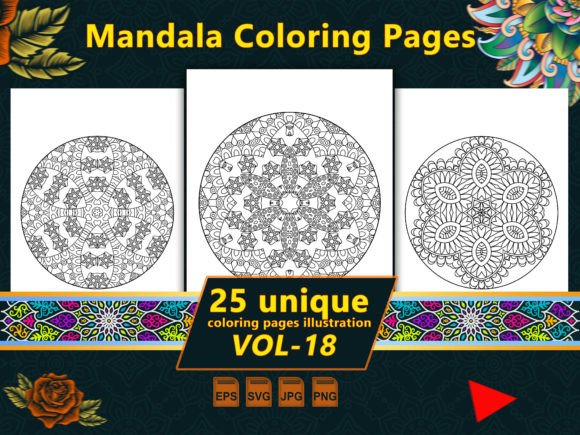
Let us be clear about what you are downloading. The product description states that Mandala Coloring Pages Vol-18 Interiors includes 100 unique coloring page illustrations, with a collection of 25 pages in EPS, JPG, PNG, and SVG file formats. These are graphic files, not stitch-ready embroidery files. You will need to digitize them yourself or work with a digitizer. The SVG and EPS formats are particularly useful for embroidery digitizing because they preserve clean vector paths that can be converted into stitch objects. The PNG and JPG files are great for mockups, product previews, and Etsy listing images.
Because these are designed as coloring pages, the linework is intentionally clean and closed, which makes conversion to embroidery far smoother than tracing a photo or a sketch. The shapes are already defined. You just need to map them to stitch types. That saves serious time.
Before you sell any finished product, confirm the licensing terms. The product is listed under Coloring Pages Amp and categorized as Graphics, which suggests it is intended for KDP and print use. However, many designers do use such assets for embroidery and physical products. Always check the specific license. If commercial embroidery use is not explicitly covered, reach out to the seller. Do not assume. A quick message can save you legal trouble later.
Practical Designer Notes for Success
Here is my honest advice after years of testing designs on real products. First, test on scrap fabric. Always. Even if you have digitized a hundred mandalas, this specific collection has its own line weights and spacing rhythms. Run a test sew-out on a fabric similar to your final product. Check for gaps, thread breaks, and registration issues.
Second, pay attention to thread color contrast. A mandala that looks crisp in black ink on white paper may feel very different when stitched in a tonal thread on oatmeal linen. I often stitch a small section in two or three thread color options before committing to a full run. It is worth the extra ten minutes.
Third, review stitch density with a critical eye. Mandalas can become dense quickly, especially in the center. If the center rosette is too dense, it can create a stiff, uncomfortable spot on a wearable item. Ease the density slightly in the digitizing software, and use a quality underlay to keep the stitches from sinking into the fabric.
Fourth, consider the stabilizer carefully. For woven fabrics, a medium cutaway is my go-to. For knits, I add a water-soluble topper to prevent the stitches from disappearing into the fabric texture. For towels, a heavy water-soluble topper is essential to keep the mandala sitting on top of the loops rather than getting buried in them.
Finally, think about how the finished product will look after washing. Mandalas with dense fill areas can distort slightly after multiple washes if the stabilizer is not adequate. Always wash and dry one test piece before you ship to a customer. Your reputation depends on how the product holds up over time.
Where This Design Truly Belongs
In my experience, Mandala Coloring Pages Vol-18 Interiors shines brightest on home decor and personal accessories. A linen tea towel with a corner mandala in indigo thread. A canvas tote with a centered mandala in warm goldenrod. A baby blanket with a soft mandala motif in blush pink. A denim jacket with a large back panel mandala. A simple cotton apron with a mandala pocket detail. These are the projects that feel natural, unforced, and genuinely sellable.
For the craft business owner, this collection provides a visual language that is easy to brand around. You can build an entire shop section around the mandala theme, and these designs give you enough variety to keep it interesting. For the hobbyist, it is a relaxing and rewarding set of motifs to stitch for gifts or personal use. For the Etsy seller, the mockup potential alone is significant, those PNG and JPG files can be used in product previews to attract buyers before you even stitch a single piece.
I have reviewed many design assets over the years, and I always look for workability over wow factor. Mandala Coloring Pages Vol-18 Interiors earns its place not because it is flashy, but because it is solid, adaptable, and genuinely pleasant to work with. The designs do not fight you. They cooperate. And in a production environment where time is money, that cooperative quality is worth more than any amount of decorative complexity.