Vintage Pin Up Girl Coloring Clip Art Review
First Glance: A Nostalgic Mood With Real Stitch Potential
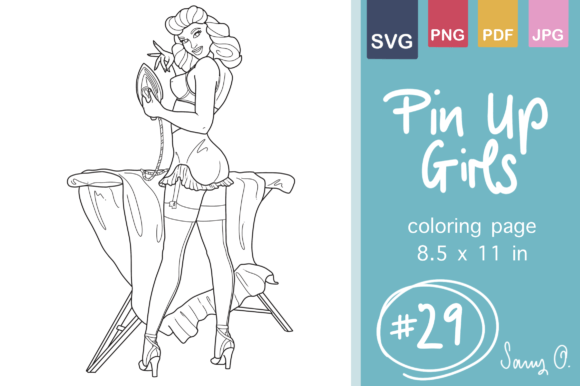
Opening the file set for Vintage Pin Up Girl Coloring Clip Art feels like flipping through a well-kept magazine from the 1940s. The illustrations carry that unmistakable mid-century charm—soft curves, playful poses, red lips, rolled hairstyles, and swimsuits that whisper old Hollywood rather than shout anything brash. For an embroidery designer, the first question is never just "is this pretty?" but "will this stitch cleanly on a cap, a tote, or a sweatshirt without becoming a tangled mess?" These illustrations, with their clean contour lines and defined shapes, actually hold real promise.
The 8.5×11-inch PDF and JPEG files give a generous canvas size, which means you can scale down thoughtfully without losing the soul of the artwork. The SVG files are what caught my attention most—vectors are a digitizer's best friend. You can pull clean paths into embroidery software, adjust nodes, and map out stitch types without fighting pixelated edges. That said, Vintage Pin Up Girl Coloring Clip Art was originally designed for coloring books, not for machine embroidery, so a healthy dose of design judgment is required before you hit "stitch out."
What Kind of Embroidery Project This Design Actually Belongs To
I see these pin up girls living on products where nostalgia sells. Think retro-themed aprons for a bakery brand, denim jacket panels for a boutique, or cheeky throw pillow covers that a customer buys as a gift for someone who loves vintage fashion. The silhouette-heavy nature of the illustrations means they could translate beautifully into a single-color satin stitch or a two-tone applique treatment. You wouldn't want to attempt photo-realistic shading here—embrace the graphic, posterized look and let the stitch texture do the talking.
In my studio, I immediately pictured a custom tote bag project. A client who runs a small pin-up themed hair salon asked for branded merchandise that didn't feel cheap. Loading one of these illustrations into my digitizing software, I could see how a simplified version—maybe just the outline and a few key interior lines—would stitch out beautifully on a heavyweight canvas tote with a contrasting thread color. The design would read clearly from across the room, and that readability is what sells handmade products.
Real-Life Embroidery Performance: Where It Shines and Where It Fights You
Let's talk about how Vintage Pin Up Girl Coloring Clip Art actually behaves when you start thinking in thread. The original art has plenty of interior detail—facial features, hair strands, fabric folds in the swimsuits, and small decorative elements. In embroidery, small details can turn into dense, bulletproof patches of thread that pucker lightweight fabric or snap on a curved cap surface. You'll need to simplify.
For a left-chest sweatshirt placement, I'd strip the design down to the essential outer silhouette and maybe two or three interior lines. A full satin stitch rendering of every curl and eyelash would create a stitch density nightmare on anything smaller than a 5×7 hoop. On a larger canvas—say, the back panel of a denim jacket—you could get away with more detail, using fill stitches for the hair and a running stitch for finer facial features. The key is testing one design first on scrap fabric before committing to a production run of twenty tote bags or aprons.
Dark fabric presents another layer of consideration. The illustrations, being black line art in their original form, will need thread color choices that pop against navy, charcoal, or black backgrounds. A bright cherry red or a soft cream thread on a dark sweatshirt could look stunning, but you'll want to run a test stitch to confirm the contrast reads well from a normal viewing distance. What looks crisp on a computer screen can turn muddy once thread hits textured fabric.
Fabric, Stabilizer, and Hoop Size: The Unsexy Details That Make or Break the Project
Stretchy fabric is not this design's best friend. If you're planning to embroider a pin up girl onto a baby onesie or a lightweight jersey t-shirt, you'll need a sturdy cut-away stabilizer and possibly a topper to keep the stitches from sinking into the knit. The illustration's curves and smooth lines demand crisp edges, and nothing ruins a vintage silhouette faster than wobbly outlines caused by fabric shifting during stitching.
For structured pieces like caps, you'll need to think carefully about the design's placement. The curved surface of a baseball cap can distort a tall, vertical illustration. A pin up girl with an elongated pose might wrap awkwardly around the cap's side panels. In that case, I'd choose a more compact, centered composition from the set—one where the figure is seated or cropped closer—and keep the stitch area within the flat front panel of the cap.
Tea towels and aprons made from woven cotton or linen are far more forgiving. The fabric lies flat, the weave holds stitches well, and the retro theme naturally fits kitchen textiles. A single-color outline stitch of a pin up girl on a flour sack towel, paired with a cheeky phrase, would sell well at a craft fair or in an Etsy shop. The design from Vintage Pin Up Girl Coloring Clip Art gives you that flexibility because the artwork is clean enough to adapt without losing its identity.
Customer Perception: What Buyers Actually See and Feel
When a customer picks up an embroidered product featuring a pin up girl illustration, they're not just buying a bag or a pillow—they're buying a conversation piece. The vintage aesthetic carries built-in charm and a sense of nostalgia that resonates with a wide audience, from rockabilly enthusiasts to collectors of mid-century memorabilia. The design's style signals "handcrafted with care" rather than "mass-produced iron-on transfer," and that distinction matters for small shop branding.
One thing I've noticed over years of selling embroidered goods is that customers respond to designs that feel intentional. A pin up girl stitched in a single, well-chosen thread color on a natural linen pillow cover looks curated and thoughtful. The same image attempted in six colors with dense fill stitching on a shiny polyester bag can look chaotic and cheap. The illustrations in Vintage Pin Up Girl Coloring Clip Art give you the bones of a strong design, but your thread choices, fabric selection, and stitch simplification are what will determine whether the finished product feels like a boutique item or a rushed craft project.
Commercial Use, Licensing, and Small Business Practicalities
Before you list that embroidered patch set or personalized tote bag on Etsy, you need to confirm exactly what the license for Vintage Pin Up Girl Coloring Clip Art allows. The product description mentions the SVG files can be used for sublimation and "just about" everything else, but that doesn't automatically clarify whether you can sell finished embroidered products using these graphics. Always check the licensing terms included with the purchase. If the license is unclear, reach out to the seller directly. A quick email now can save you from a copyright headache later.
For digital product sellers who create printable mockups or design assets, the JPEG and PDF files at 8.5×11 inches are ready to drop into presentations, product previews, or branding kits. If you're showing clients what their embroidered merchandise could look like, these illustrations work well for mockup purposes because they're clean, high-contrast, and visually striking.
Practical Designer Notes: What I'd Do Before Running a Single Stitch
Here's my honest, from-the-trenches checklist for anyone planning to use Vintage Pin Up Girl Coloring Clip Art in an embroidery project:
- Test on scrap fabric first. Always. Pick a fabric similar to your final product and run a full stitch-out before touching the actual garment or bag.
- Simplify the artwork. Remove tiny interior lines that will blob together at small sizes. Keep the silhouette bold and the details minimal.
- Check thread color contrast. Hold the thread spool against the fabric under natural light. What matches on screen rarely matches in real life.
- Review stitch density. If the design feels stiff or heavy after stitching, reduce the density in your digitizing software before the next test run.
- Confirm your hoop size. Measure the design's stitch area and make sure it fits comfortably within your hoop with at least a half-inch margin on all sides.
- Inspect small details. Eyes, fingers, and small accessories can turn into unrecognizable blobs. Simplify or enlarge as needed.
- Test in black and white. Print a grayscale version of the design at the size you intend to stitch and see if the shapes still read clearly without color.
- Compare light and dark fabric backgrounds. A design that looks great on white canvas might disappear on a dark denim jacket. Test both or commit to one.
- Use proper stabilizer. Don't cheap out here. Cut-away for knits, tear-away for wovens, and a topper for fluffy or textured fabrics.
- Confirm personal and commercial use rights. Read the license. If anything is vague, ask the seller before you sell finished items.
Where I'd Use This Design Without Hesitation
After spending time with the artwork, here are the products where I believe Vintage Pin Up Girl Coloring Clip Art would perform best as an embroidery asset:
- Canvas tote bags with a single-color outline stitch
- Denim jacket back panels using a simplified satin and fill stitch combination
- Kitchen aprons with a retro-themed placement on the bib or pocket
- Throw pillow covers in natural linen or cotton, stitched in a muted thread tone
- Embroidered patches with a merrowed edge, sold individually or in sets
- Tea towels as part of a holiday gift collection or bridal shower set
- Small shop merchandise for brands with a vintage, rockabilly, or retro aesthetic
Where I'd Pause and Reconsider
Some products will fight the design's natural strengths. I'd be cautious about using these illustrations on:
- Baby onesies with highly stretchy fabric unless you're confident in your stabilizer technique
- Curved cap surfaces where the tall vertical composition might warp
- Very small hoop sizes below 4×4 inches, where detail loss becomes inevitable
- Thin or sheer fabrics that won't support dense stitch areas without puckering
- Products needing frequent heavy washing, unless you've thoroughly tested stitch durability
The Bottom Line From a Working Designer's Perspective
Vintage Pin Up Girl Coloring Clip Art is not a plug-and-play embroidery file set, and it doesn't pretend to be. It's a collection of beautifully drawn vintage illustrations that an experienced embroidery designer can adapt, simplify, and digitize into something genuinely marketable. The artwork carries a distinct personality that stands out in a sea of generic floral and monogram designs. For a craft business owner, an Etsy seller, or a small shop looking to build a cohesive brand around retro aesthetics, these illustrations offer a strong starting point.
What you do with them from there—your thread choices, your fabric pairings, your simplification decisions, and your stitch mapping—will define the finished product. That's the part of embroidery work that no digital file can replace. These graphics give you the creative bones. The rest is your craft.
If you're comfortable with a digitizing workflow and you understand how to adapt paper-based artwork for thread and fabric, Vintage Pin Up Girl Coloring Clip Art belongs in your design asset library. Just remember to test thoroughly, license responsibly, and always keep the end customer's experience in mind. A well-stitched pin up girl on a quality product is memorable. A rushed one is forgettable. Choose the path that builds your brand.