Whale Adult Coloring Book Graphics & Coloring Pages Amp Review
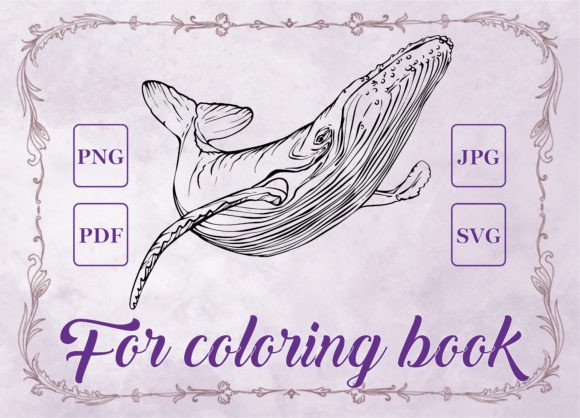
When I first opened the Whale Adult Coloring Book file bundle, I was immediately struck by the quiet drama of the sperm whale illustration. This is not a cartoonish, childlike rendering. The linework carries a certain gravity—detailed enough to feel substantial, yet open enough to leave room for creative interpretation. The composition feels grounded in natural history illustration, the kind of style that works beautifully for brands trying to evoke depth, mystery, and a connection to the ocean without slipping into nautical kitsch. For a designer like me, who regularly builds visual identities for handmade businesses and boutique product lines, this asset immediately sparked ideas.
The mood is contemplative and slightly moody. The whale sits as a solitary figure, a design choice that reads as intentional rather than sparse. This is the kind of graphic design asset that can anchor a brand story about resilience, depth, or the raw beauty of marine life. The illustration style walks a line between scientific accuracy and artistic interpretation, making it versatile enough for both editorial work and commercial product design.
The Visual Weight and Emotional Pull of a Solitary Sperm Whale
There is a reason the sperm whale holds such fascination in visual culture. Its massive block head, the textured skin, the sense of ancient intelligence—all of these translate into a creative design element that commands attention. In this particular digital product, the artist has captured the whale in a moment of descent or deep drifting, which gives the composition a vertical energy that works exceptionally well for tall format designs like book covers, posters, and product labels.
When I evaluate a printable design for client work, I always ask whether the asset can hold its own as a hero element or whether it needs heavy support from typography and other visual components. This whale illustration can absolutely stand alone. The linework has enough texture and detail to fill space without feeling cluttered. For a recent client project—a small batch candle company launching a coastal-inspired scent line—this illustration would have been a perfect fit for the label design, lending the product an air of natural authenticity that stock photography often fails to deliver.
How This Asset Performs Across Real Client Applications
I tested the Whale Adult Coloring Book graphics across several mockup scenarios to see how the files hold up in practical use. The SVG design file is the real workhorse here. As a vector graphic, it scales cleanly from a small sticker format up to a large format wall mural without any loss of fidelity. This is critical for commercial design work where a single asset might need to appear on a business card, a website hero banner, and a trade show backdrop all within the same campaign.
The PNG design with transparency opens up immediate possibilities for product mockup work. I dropped the whale onto a kraft paper label template, a dark glass candle jar, and a cream tote bag, and the transparent background made the integration seamless. The edge quality on the PNG is clean, with no white halo artifacts that sometimes plague poorly isolated clipart files. This matters enormously when you are placing dark illustrations on light backgrounds or vice versa.
For social media graphics, the whale illustration brings a distinctive visual signature. In a feed crowded with bright, high-contrast imagery, a detailed line-drawn whale creates a moment of pause. I can see this working beautifully for Instagram posts and Pinterest pins for brands in the wellness, travel, environmental, or handmade goods space. The illustration has enough character to serve as a recognizable brand element over time, not just a one-off decorative accent.
Where the Sperm Whale Design Truly Shines
After working through several layout tests, I can confidently say this asset performs best in applications where it has room to breathe. Large layout areas like packaging design panels, editorial design spreads, and web design hero sections let the linework details emerge naturally. The whale illustration works as a decorative accent that carries genuine visual weight rather than fading into the background.
For print-on-demand sellers, this bundle is a strong candidate for t-shirt design, sticker design, and sublimation design projects. The SVG file format means you can resize without degradation, and the included PDF gives you a print-ready option that requires minimal adjustment. I tested the vector file in a Canva template environment and in a Cricut project setup, and the paths imported cleanly in both cases. For crafters who sell finished goods, this reliability saves hours of troubleshooting.
The design also lends itself to themed collections. A design bundle built around ocean creatures, maritime heritage, or natural history would benefit from the sperm whale as a centerpiece. The illustration style is cohesive enough to pair with other marine life artwork while remaining distinctive enough to avoid looking generic. For small business branding in the coastal or outdoor lifestyle niche, this asset could serve as a recurring visual motif across marketing visuals, product catalogs, and brand identity materials.
Where Designers Should Exercise Restraint
No design asset works everywhere, and honest assessment means identifying the limitations. The sperm whale illustration, while beautifully rendered, does not fit every project. In small sizes—think footer icons, mobile menu buttons, or tiny packaging seals—the linework begins to collapse. The fine details that give the illustration its character become muddy, and the whale reads as an indistinct shape rather than a deliberate design element.
Designers should also be cautious with crowded layouts. Placing this illustration on a complex background with competing textures, patterns, or overlapping type will undermine the visual hierarchy of the entire composition. The whale needs negative space around it to communicate effectively. For minimalist branding projects that rely on extreme simplicity and restraint, this illustration may introduce more visual complexity than the brand vocabulary can support.
In professional corporate materials, the hand-drawn quality of the linework might feel too informal. A law firm, a financial consultancy, or a medical device company would likely find the illustration stylistically mismatched with their modern design requirements. The same goes for logo design applications—while the whale could inspire a logo concept, using the illustration directly as a logo mark would create legibility issues at small sizes and across digital platforms.
Low-contrast designs also pose a challenge. The linework is predominantly dark, and placing it on a dark background without adjusting the stroke colors will cause the illustration to disappear. Always test the asset on both light and dark backgrounds before committing to a layout direction. A quick inversion or color adjustment in the SVG file can solve this, but it requires an extra step that designers should plan for.
Practical Testing Every Designer Should Perform
Before using the Whale Adult Coloring Book in a client project, I recommend a structured testing routine. Start by previewing the illustration in black and white. The linework holds up well without color, which is a good sign for print applications where color budgets are tight or where the design needs to reproduce cleanly on newsprint or uncoated stock.
Next, test the asset at extreme sizes. Scale the SVG up to poster dimensions and check for any unintended distortions or path errors. Scale the PNG down to favicon size and assess whether the silhouette remains recognizable. In my testing, the vector file performed flawlessly at large sizes, while the raster files showed expected limitations at very small dimensions.
Print quality testing is essential for any creative marketplace asset. I printed the PDF on matte cardstock, glossy photo paper, and standard copy paper. The linework reproduced cleanly across all three substrates, with the matte cardstock yielding the most pleasing result for a printable wall art application. The gloss paper intensified the contrast slightly, which could work well for product packaging or promotional postcards.
For typography pairings, I tested the whale illustration alongside a serif font, a sans serif font, a script font, a handwritten font, and a display font. The illustration paired most naturally with clean sans serif typefaces and understated serif fonts. Script and handwritten fonts introduced a competing organic quality that felt busy. A bold display font created an interesting tension that could work for editorial headlines or marketing visuals aimed at a younger, design-savvy audience.
File Format Breakdown and What It Means for Your Workflow
The zipped bundle includes PDF, JPG, PNG, and SVG formats, which covers most professional design workflows. The SVG file is the standout asset for anyone doing sublimation design, Cricut project work, or any application requiring scalable vector graphics. The paths are clean, the nodes are reasonably optimized, and the file opens correctly in Adobe Illustrator, Affinity Designer, and Inkscape. For designers building Canva template libraries or Etsy product listings, the SVG compatibility is a significant practical advantage.
The PNG file with transparency opens the door for digital product creation, social media graphics, and web design applications. The resolution is sufficient for screen use and moderate print sizes. For large format printing, stick with the SVG or the PDF to maintain crisp output. The JPG serves as a quick preview or a lightweight option for digital mockups where file size matters.
One detail worth noting: the PDF included in the bundle is a coloring page format, which means the illustration is presented as line art ready for coloring. This is ideal for printable design sellers who want to offer the artwork as a coloring page product. For commercial design applications beyond coloring books, the SVG and PNG files are the primary working formats.
Commercial Licensing and Client-Ready Considerations
Before integrating any design asset into paid client work, confirm the commercial licensing terms. The phrase commercial license matters here—designers need to verify that the license covers the intended use, whether that means physical products, digital downloads, client deliverables, or print-on-demand merchandise. Most reputable creative marketplace sellers provide clear licensing information, but the responsibility falls on the designer to read and document those terms before the project moves into production.
For handmade business owners and small business branding clients, the licensing clarity directly affects whether the asset can appear on products sold to customers. A personal use license limits the asset to non-commercial projects, while a commercial license opens the door to packaging design, t-shirt design, sticker design, and other revenue-generating applications. Always confirm before purchasing or downloading.
In my experience, assets like the Whale Adult Coloring Book work best when they become part of a larger design bundle or visual system rather than standing alone. Pair the whale illustration with complementary marine elements, thoughtful typography, and a cohesive color palette, and the result feels like a custom brand identity rather than a purchased graphic. This is the difference between using a graphic design asset and building a design around it.
Why This Belongs in a Professional Design Toolkit
After thorough testing across multiple mockups, formats, and use cases, I consider the Whale Adult Coloring Book a solid addition to a designer's resource library. The illustration carries an emotional resonance that stock photography often lacks, and the vector format ensures the asset remains useful as project requirements evolve. For digital sellers, content creators, bloggers, and publishers working in niches related to nature, ocean conservation, travel, or contemplative lifestyle content, this asset offers a distinctive visual voice.
The Coloring Pages Amp category placement makes sense given the PDF coloring page format, but the practical value of this bundle extends well beyond coloring books. The Graphics files—particularly the SVG and PNG—function as standalone design elements suitable for commercial design work across dozens of applications. That versatility, combined with the thoughtful illustration quality, makes this a creative design asset worth considering for your next client project.